
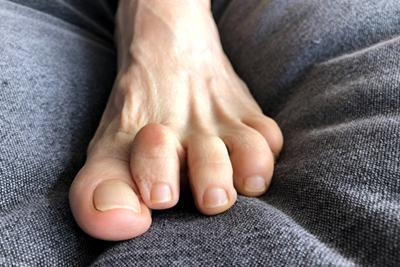
Dr. John Sigle, Dr. Grant Gonzalez, and Dr. Zachary Janes at the Foot and Ankle Center of Illinois, serving Springfield, Carlinville, Shelbyville, and Decatur, help patients with all sorts of foot and ankle conditions, including hammertoes. This kind of deformity affects the joints of the toes, most commonly the second, third, or fourth toes. It causes the affected toe to bend or curl downward, resembling a hammer, instead of pointing forward. In the early stages, hammertoes remain flexible and can be manually straightened. However, if left untreated, they can become rigid and fixed in a bent position, leading to more severe symptoms and complications.
Causes of Hammertoes
Several factors can contribute to the development of hammer- toes. One of the most common causes is wearing ill-fitting shoes, particularly those that are too tight or have high heels. These shoes can force the toes into a bent position, eventually leading to muscle imbalance and joint deformity. Genetics also play a role, as some people may be predisposed to developing hammertoes due to their foot structure or inherited muscle weakness. Additionally, certain medical conditions such as arthritis, diabetes, or neuromuscular disorders can increase the risk of developing hammertoes. Trauma to the toe or previous toe surgeries may also lead to this condition.
Symptoms and Complications
The most noticeable symptom of hammertoes is the abnormal bend in the affected toe. This can lead to pain and discomfort, especially when wearing shoes, as the bent toe may rub against the shoe. Corns and calluses often develop on the top of the toe or on the ball of the foot due to increased friction. In more severe cases, hammertoes can cause difficulty walking and may lead to balance problems. If left untreated, the condition can worsen, potentially requiring more invasive treatments in the future.
Diagnosis and Treatment Options
Our Springfield, Carlinville, Shelbyville, and Decatur podiatrists at the Foot and Ankle Center of Illinois perform thorough examinations to diagnose hammertoes and determine the best course of treatment. This may include a physical examination, X-rays, and an assessment of your footwear and walking pattern. Treatments vary depending on the severity of the condition and may include conservative approaches such as wearing properly fitting shoes, using padding or orthotic devices, and performing specific exercises to strengthen and stretch the toe muscles. In more advanced cases, surgical intervention may be necessary to correct the deformity and alleviate symptoms.
Minimally Invasive In-Office Procedure
According to John M. Sigle, DPM, FACFAS, “We often perform a minimally invasive in-office procedure during a patients first exam to correct this condition. We can make a percutaneous incision (made, done, or affected through the skin) that allows us to release the tendon and straighten their toe within minutes. After the procedure, we place a band-aide on the toe and the patient is able to recover extremely fast. There is no swelling so patients able to wear their normal shoes with no restrictions. Patients have a cosmetically pleasing result because there is no incision and are able to wear open toe shoes.
Prevention and Foot Health
Preventing hammertoes involves making smart choices about footwear and taking good care of your feet. Wearing shoes with a wide toe box and low heels can help prevent undue pressure on your toes. Regular foot exercises and maintaining a healthy weight can also reduce the risk of developing hammertoes.
If you're experiencing symptoms of hammertoes or have concerns about your foot health, don't hesitate to reach out to Dr. John Sigle, Dr. Grant Gonzalez, or Dr. Zachary Janes at the Foot and Ankle Center of Illinois. With locations in Springfield, Carlinville, Shelbyville, and Decatur, our team provides expert care and personalized treatment plans to keep your feet healthy and pain-free. Call (217) 787-2700.